

San Diego Military Housing Market Update: PCS Season 2026 (BAH, Inventory & VA Assumptions)
What military families PCSing to San Diego need to know in summer 2026 — BAH rates, base-adjacent inventory, the detached vs. condo split, and why assumable VA loans matter.
Hi friends,
We're in the thick of PCS season, and the San Diego market near the bases deserves an honest read — the headlines never tell the full story for military families.
The big picture: San Diego is tight. County inventory is down about 15% from last year, sitting at just a 3-month supply. The countywide median hit $950,000 in June, up 4.4% year over year. But here's what matters if you're shopping: single-family homes and condos are behaving like two completely different markets. Detached inventory dropped 26% — that's where the bidding wars are. The attached market (condos and townhomes) is at a much more balanced 4 months of supply, taking around 43 days to sell, and closing under asking. Anyone who says "you can't negotiate in San Diego" is only half right.
BAH is doing real work this year. The 2026 rates put an E-5 with dependents at $3,975/month, with mid-career NCOs through junior officers landing between roughly $4,100 and $4,650. That supports buying power in the $650K–$800K range — which, not coincidentally, is exactly where the competition is fiercest. Homes under $850K near the bases are routinely seeing multiple offers the first weekend. It's also why the South Bay — National City, Chula Vista, Otay Ranch — is the fastest-growing part of the county right now. The math works there.
PCSing in? On-base housing waitlists are running 6–12 months (sometimes longer), so most incoming families end up in the private market whether they planned to or not. Getting a VA pre-approval done before arrival makes all the difference. Rates are hovering in the mid-6s, which brings me to my favorite topic in real estate...
Assumable loans are gold. This is the single biggest money-saving opportunity for veterans and service members buying in San Diego right now. If a seller bought in 2021–2022 with a VA loan at 3%, that loan can potentially be assumed by a qualified buyer — and at today's prices, the monthly payment difference is life-changing. Sellers with a low-rate VA loan are holding a marketing asset, not just a mortgage.
Thinking of selling? With detached inventory this thin, well-priced homes near Miramar, 32nd Street, and Coronado are moving fast. Every summer, thousands of pre-approved military buyers arrive with orders in hand and a deadline. There is no more motivated buyer pool than the one here right now through the end of August.
If you or someone you know has orders to (or out of) San Diego — or you're just curious what your home is worth in this market — reach out to me. Happy to help.
Lexie Dindal Compass Military Division | The Pond Team
DRE AB066667; MSLRA021
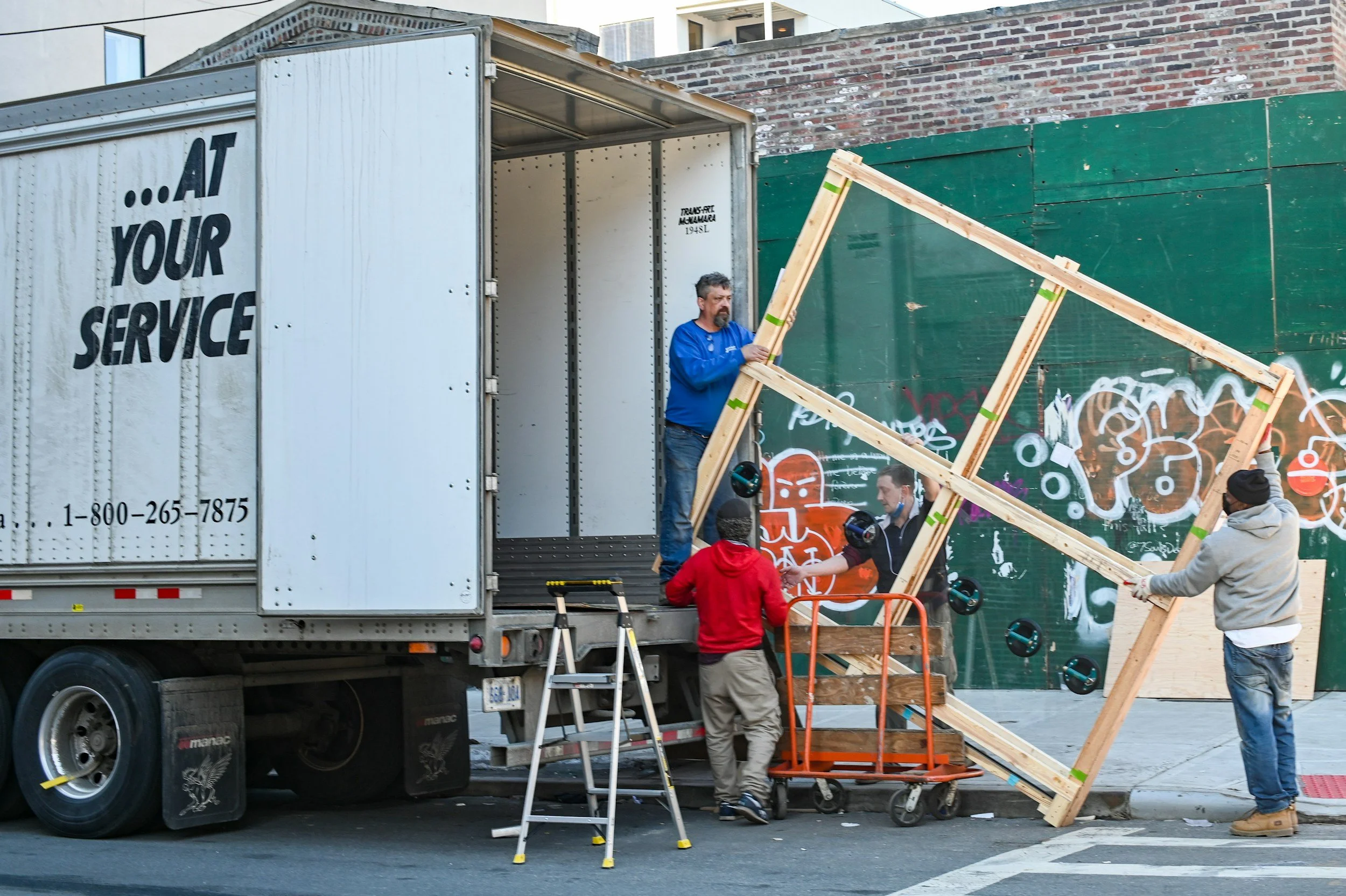
Can You Sell Your San Diego Home After You've Already PCS'd? (Yes, Here's Exactly How)
PCS'd out of San Diego with a home still to sell? Here's the complete step-by-step guide to selling remotely — power of attorney, digital signing, virtual walkthroughs, and what your local agent should handle on the ground.
The moving truck left weeks ago. You're settling into a new duty station in Norfolk, Okinawa, or San Antonio — and your San Diego house is sitting 2,000 miles behind you, still yours, still needing to sell.
If that's you, take a breath. This is one of the most common situations in military real estate, and it's completely solvable. Thousands of military families sell San Diego homes every year without ever setting foot back in the county. The process just looks different than a traditional sale — and knowing how it works before you start will save you weeks of stress.
Here's the complete playbook.
First, the Short Answer: Yes, You Can Sell Entirely Remotely
California law does not require you to be physically present for any part of a home sale — not the listing, not the inspections, not the closing. Every step can be handled through some combination of:
Digital signatures, a properly executed power of attorney, video walkthroughs, and a local agent acting as your eyes, hands, and project manager on the ground.
The families who struggle with remote sales aren't struggling because remote sales are hard. They're struggling because they picked an agent who treats a remote seller like an inconvenience instead of building the sale around it.
Step 1: Choose an Agent Who Actually Specializes in Remote Military Sales
This is the decision that determines how the next 60–90 days feel.
A remote PCS sale asks far more of a listing agent than a normal transaction. Your agent isn't just marketing the house — they're coordinating vendors, meeting the inspector, checking on the property after storms, handling the punch list, and communicating across time zones (sometimes across an ocean, if you've landed at Yokosuka or Ramstein).
When you're interviewing agents, ask directly:
"How many remote sales have you closed for sellers who had already PCS'd?" You want a specific number and recent examples, not "oh, I've done a few."
"Who physically opens the house for inspectors, appraisers, and contractors?" The answer should be "I do, or my team does" — not "we'll figure it out."
"How will you communicate with me if I'm in a different time zone?" Look for agents comfortable with asynchronous video updates, not just phone tag.
"What happens if the buyer's inspection turns up repairs?" A remote-sale specialist has a bench of licensed, insured vendors they've used dozens of times and can get bids without you lifting a finger.
This is exactly the gap that agents like Lexie Dindal of Compass Military Division built their practices around. As a Navy spouse who has personally PCS'd through Pennsylvania, Japan, Hawaii, and San Diego, she's lived both sides of this transaction — and her team's process assumes from day one that the seller may never be in the room. That assumption changes everything about how the sale is run.
Step 2: Set Up Your Signing Authority Before You Need It
There are two ways to sign documents from your new duty station, and most remote sales use both.
Digital signatures (covers 90% of it)
California fully recognizes electronic signatures on real estate documents. Your listing agreement, disclosures, counteroffers, and most transaction paperwork will come to you through DocuSign or a similar platform. You'll sign from your phone in base housing at Fort Cavazos just as easily as you would across a kitchen table in Clairemont.
Power of attorney (covers the rest)
The one place e-signatures typically aren't enough: certain closing and loan-payoff documents that must be notarized. You have two options here:
Remote online notarization or a mobile notary near your new duty station. Many escrow companies can accommodate this — you sign the deed and closing docs wherever you are, they're notarized locally or online, and overnighted or transmitted back to escrow in San Diego.
A Specific Power of Attorney (POA). This authorizes a trusted person — often a spouse who hasn't left yet, or in some cases another designated agent — to sign specific closing documents on your behalf.
A few things military sellers should know about POAs:
Use a specific POA (limited to this one property transaction), not a general one. Title and escrow companies scrutinize POAs closely, and a specific POA sails through more smoothly.
Your installation's legal office (JAG) will prepare a POA for free. Do this before you detach if at all possible — it's a 30-minute appointment stateside versus a logistical puzzle from overseas.
If you're deployed or OCONUS, the Servicemembers Civil Relief Act and military notary provisions give you additional options — military legal assistance offices and many commands have notary authority.
Get escrow's approval of the POA language early in the transaction, not the week of closing. A good agent will send your POA to the title company for review before you even have an offer.
Pro tip: Even if you plan to sign everything yourself digitally, having a POA executed as a backup costs you nothing and can save a closing if you're suddenly in the field, underway, or unreachable during the signing window.
Step 3: Prep the House Without Being There
The house needs to be market-ready after you've gone. Here's how that actually gets handled:
If the house is empty: Your agent coordinates cleaners, landscapers, painters, and handymen directly, sends you photos and bids, and you approve by text. Many remote specialists also recommend light virtual staging for the listing photos — far cheaper than physical staging and highly effective for vacant homes.
If tenants are in place: Selling with tenants (or after tenants vacate) adds coordination around notice requirements and showings. This is another area where local expertise matters — San Diego and California tenant-notice rules are specific, and your agent should manage all of it.
Utilities: Keep water and electric on through closing. Inspectors and appraisers need functioning utilities, and buyers walking a dark house don't write strong offers. Your agent can help set up landlord/absentee accounts if needed.
The walkthrough problem, solved: Anything you'd normally eyeball in person — the fresh paint, the repair work, the pre-listing condition — your agent handles by video walkthrough. Live FaceTime tours, recorded video updates, and photo documentation at every milestone mean you see everything a local seller would see, just through a screen.
Step 4: List, Show, and Negotiate From Anywhere
Once the home is live, your day-to-day involvement is actually lighter than most sellers expect:
Showings are managed entirely by your agent through lockbox and showing-service scheduling. You're not needed.
Offers arrive digitally. Your agent walks you through terms by phone or video call — evenings your time, whatever time zone that is — and you sign counters and acceptance electronically.
The buyer's inspection happens with your agent present at the property. You'll get the report digitally, and repair negotiations happen exactly as they would if you were local.
Repairs get handled by your agent's vendor network, with invoices often paid through escrow at closing so you're not fronting costs or mailing checks.
One thing worth flagging: if your buyer is using a VA loan (very common in San Diego), the VA appraisal has its own condition requirements. An agent who works military transactions daily knows what VA appraisers flag and gets ahead of it — chipped exterior paint, missing handrails, that kind of thing — before it costs you a week of escrow.
Step 5: Close From Your New Duty Station
Closing week for a remote seller looks like this:
Escrow sends final closing documents digitally for review.
You sign electronically where permitted, and complete the notarized documents via remote online notarization, a local mobile notary, or your POA holder.
Signed originals (if physical) go back to escrow by overnight courier — escrow companies handle military and overseas sellers routinely and will walk you through it.
Your proceeds are wired directly to your bank account. No check to chase across a PCS.
From offer acceptance to funded closing, a well-run remote sale takes the same 30–45 days as a local one. The distance adds coordination — not time — when the process is built for it.
A Quick Word on Timing and Taxes
Two things worth a conversation with a professional before you list:
Capital gains: The IRS lets you exclude up to $250,000 (single) or $500,000 (married filing jointly) of gain on a primary residence if you lived there two of the last five years — and military sellers get a major extension: PCS orders can suspend that five-year clock for up to ten additional years. If you've been renting the home out since a previous PCS, you may still qualify. Talk to a tax professional about your specific dates.
Sell vs. rent: If you're on the fence, run both numbers before deciding. San Diego's rental market is strong, but long-distance landlording has real costs and real headaches. An agent who works with military families constantly can give you an honest read on what your home would rent for versus net at sale — and shouldn't push you toward whichever answer pays them.
The Bottom Line
Selling a San Diego home after you've already executed PCS orders isn't a compromise version of a home sale — done right, it's simply a home sale with better logistics. The keys:
Hire an agent whose practice is genuinely built for remote military sellers
Execute a specific POA (ideally before you detach) even as a backup
Sign digitally, close via mobile notary or POA
Let your agent be your boots on the ground for prep, inspections, and repairs
Review the military capital gains extension before you list
The families who've done this successfully will tell you the same thing: the hardest part was believing it could be this manageable.
Lexie Dindal is a military relocation specialist with Compass Military Division in San Diego. A Navy spouse with 25+ years of experience and 300+ homes sold, she has PCS'd through Pennsylvania, Japan, Hawaii, and California — and has built her practice around helping military families buy and sell San Diego homes from anywhere in the world. Questions about selling your San Diego home from your new duty station? Reach her at 619-721-7868 or lexie.dindal@compass.com.
DRE# CA MSRLA021
How do I find assumable mortgages in San Diego?
If you're asking this question, you've already figured out something most buyers haven't: some of the best deals in San Diego right now aren't about the house — they're about the loan attached to it.
Here's the short answer: assumable mortgage listings in San Diego can be found through MLS keyword searches, specialized databases like AssumeList, and — most reliably — through an agent who actively hunts for them. The longer answer is that most assumable loans in San Diego are hiding in plain sight, because the majority of sellers don't even know their loan is assumable, let alone advertise it.
Let me walk you through where to look, and why this search is harder than it should be.
First, a quick refresher: what makes a loan assumable?
VA, FHA, and USDA loans are assumable — meaning a qualified buyer can take over the seller's existing mortgage at the seller's original interest rate. In a military town like San Diego, that matters enormously. A huge share of homes here were purchased with VA loans between 2020 and 2022, when rates were in the 2s and 3s. Assuming one of those loans instead of taking out a new mortgage at today's rates can save you well over a thousand dollars a month on the same house.
And here's a detail that surprises people: you don't have to be a veteran to assume a VA loan. Any qualified buyer can. (There are entitlement implications for the seller in that scenario, which is exactly the kind of thing that needs to be handled carefully — more on that below.)
Where to actually find assumable listings
1. The MLS — but you have to know how to search it
There's no clean "assumable" checkbox that agents reliably use. Some listing agents mention it in the private remarks, some in the public description, many not at all. When I search for clients, I'm running keyword searches for terms like "assumable," "VA assumption," and "2.75%" — and cross-referencing when the home was purchased. A home bought in 2021 in a heavily military zip code like 92154, 91913, or 92110? There's a good chance there's a low-rate VA loan sitting on it, whether the listing says so or not.
2. AssumeList and similar databases
AssumeList is a subscription tool that identifies properties with assumable loans by pulling loan origination data — so it can flag homes with assumable mortgages even when the listing doesn't mention it. It's one of the tools I use to build target lists for buyers. Zillow has also added an assumable filter in some markets, but coverage is inconsistent and it misses far more than it catches.
3. Public records and purchase-date detective work
This is the unglamorous part of the job. Loan type and origination date are matters of public record. If a home was purchased with a VA loan in 2020–2022, the current owner is almost certainly sitting on a rate today's buyers would love to have. Sometimes the best assumable "listing" is a home that isn't listed yet — a PCS-ing family who doesn't realize their loan is one of their most marketable assets.
4. An agent who does this every day
I'll be straight with you: this is where the real inventory is. Most assumable opportunities in San Diego never get marketed as assumable because the listing agent doesn't think to check. When I represent military buyers, I'm not waiting for a listing to say "assumable" — I'm identifying likely candidates, contacting listing agents, and asking the questions that surface these loans.
Why aren't more listings advertised as assumable?
Three reasons, and they all work in your favor if you know what you're doing:
Sellers don't know. Many VA homeowners have no idea their loan can transfer to a buyer, or that a 2.75% assumable loan can make their home dramatically more attractive than the identical house down the street.
Listing agents don't ask. Assumptions are paperwork-heavy and slow (typically 45–90 days through the lender's assumption department), and plenty of agents have never closed one. If they haven't done it, they don't market it.
The equity gap scares people off. When you assume a loan, you're taking over the loan balance — not the purchase price. If a home is selling for $850,000 and the loan balance is $600,000, you need to cover that $250,000 gap with cash or secondary financing. That math stops some buyers, but for buyers with equity from a previous sale — which describes a lot of PCS-ing families — it's very workable.
What to watch out for
Assumptions are worth the effort, but they're not something to wing:
Lender approval is required. You'll qualify through the loan's servicer, and their assumption departments move at their own pace. Build the timeline into your offer.
VA entitlement matters for the seller. If a non-veteran assumes a VA loan, the seller's entitlement stays tied up until that loan is paid off — which can limit their next VA purchase. A veteran-to-veteran assumption with substitution of entitlement solves this. Sellers need to understand this before they agree, and buyers should expect the question.
The gap needs a plan. Know your cash position and your options for covering the difference between price and loan balance before you fall in love with a house.
The bottom line
Assumable mortgage listings in San Diego exist in real numbers — this is one of the most VA-loan-dense markets in the country. But they're found, not browsed. The buyers winning these deals are the ones working with someone who searches loan data, not just listing descriptions.
I've spent 25+ years helping families buy and sell, and I've been the military spouse packing the boxes myself — PCS moves from Pennsylvania to Japan to Hawaii to California. Loan assumptions have become one of the most valuable tools in my kit for buyers priced out by today's rates. If you want a list of likely assumable candidates matched to your BAH and your timeline, reach out — that's exactly the work I love doing.
Lexie Dindal · Compass Military Division · 619-721-7868 · lexie.dindal@compass.com

San Diego Relocation Guide: Military Edition
Finding home when you PCS to San Diego made easy. Check out this detailed relocation guide.